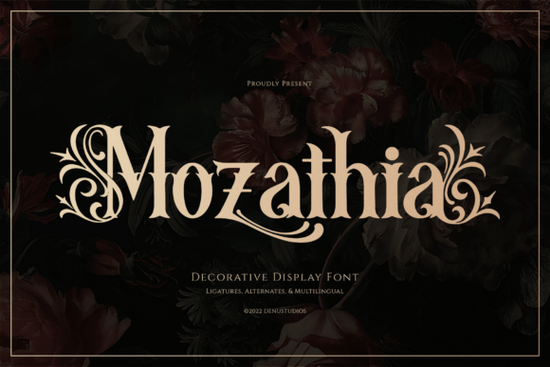
Finding a typeface that captures the essence of history while remaining usable for modern branding requires careful selection. When you need a font that combines strong structural integrity with romantic flair, the Mozathia Font offers a distinct solution for creators who value detail. It moves beyond basic utility to serve as a storytelling device, often used where atmosphere matters just as much as legibility. Whether you are designing for physical merchandise or digital layouts, understanding how this specific style functions can save you hours of editing.
What visual elements make this typeface stand out?
This decorative display font distinguishes itself through its deliberate contrast between structure and ornamentation. You will notice that the letter stems possess weight and strength, reminiscent of stone carvings found in old cathedrals. These vertical lines are capped with sharp, dagger-like serifs that give the characters a commanding presence. However, the true character emerges in the terminals. Instead of simple cuts, the letters bloom into sweeping, vine-like floral swashes. These classical flourishes wrap around the glyphs in a way that feels organic rather than mechanical.
The balance here is crucial. A font that is too ornate becomes unreadable, while one that is too plain lacks the required drama. This specific family manages to sit comfortably in the middle ground. The thick vertical strokes ensure visibility even at smaller sizes, yet the thin connecting lines maintain elegance. If you compare this to other script families, you will find fewer loops and more architectural rigidity. This makes it ideal for headlines and large-scale graphics where the shape of the word matters more than the flow of individual characters.
Where can I effectively use this design asset?
Understanding the application helps determine if it matches your current project goals. Because of its dark romance and baroque opulence, it pairs best with themes that lean towards the mysterious, vintage, or luxury side. Here are some specific scenarios where this tool works particularly well:
- Book Covers: Dark fantasy and historical fiction benefit significantly from the gothic undertones.
- Beverage Labels: Craft distillery bottles and premium wine labels often utilize this style to suggest tradition.
- Merchandise: Apparel lines targeting alternative fashion markets or high-end tattoo studio branding find success with its edgy appeal.
- Mystical Products: Tarot decks, tarot boxes, and mystical merchandise layouts gain depth from the theatrical accents.
For small businesses, using a consistent theme across packaging and marketing materials builds recognition quickly. If you are running a print-on-demand shop, selecting a cohesive font palette reduces decision fatigue. Many creators struggle to mix decorative styles with standard sans-serifs. In those cases, relying on the neutral weights of a secondary typeface keeps the layout balanced. While this font commands attention, it does not need to dominate every pixel on the page.
Exploring Similar Historical Styles
If your project involves heavy imagery, matching the typography correctly is essential. There are many variations in the blackletter market, each serving a slightly different aesthetic purpose. Some tend toward medieval simplicity, while others aim for Victorian excess. To refine your selection further, you might want to explore a broader range of historical typefaces online. Checking resources that specialize in these niches helps you see how different weights and widths function together. For example, looking at other gothic typography options allows you to curate a set that aligns perfectly with your specific color scheme and layout constraints.
How do I handle technical setup and compatibility?
Before applying the font to your work, verifying the file formats is a necessary step. Most digital distribution platforms provide open format files, ensuring wide compatibility across design software. You should check if you receive both OpenType (.otf) and TrueType (.ttf) versions. This gives you flexibility if you are working in applications with older version support. Additionally, verify that your software supports ligatures and alternate glyphs if you plan to utilize the swashes manually.
Kerning adjustments may be required depending on the spacing of the baseline characters. Since the terminal flourishes extend outward, placing two letters too close together can cause clipping issues in vector editors. Always zoom in to preview the final output before committing to production. Testing on actual material samples, such as paper stock or t-shirts, reveals how the ink interacts with the fine lines. High-resolution printing preserves the delicate serifs better than low-res web previews.
Quick Implementation Checklist
- Select your primary headline text to test visibility.
- Choose a secondary font with high contrast to this style.
- Check ligature support in your software settings.
- Export proofs in CMYK for print and RGB for web.
- Verify licensing terms for your specific commercial use case.
Finally, remember that consistency is key to professional results. Once you select this typeface, try to limit the number of decorative fonts in the same project to one. Overusing multiple heavy styles can clutter the design and reduce the impact of the intended message. Stick to clear hierarchy, letting the strongest elements lead the viewer through the composition.
Explore Design Bubble Skelly Font: Creative Design Inspiration
 Modern Vintage Fonts for Creative Designs & Projects
 Vintage String Fonts for Modern Design Projects
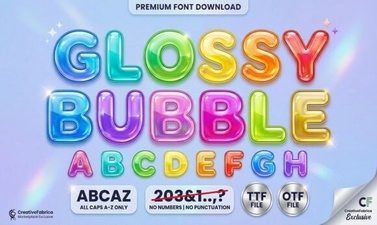 Glossy Bubble Fonts: Creative Design Ideas
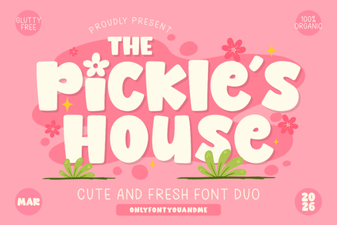 Pickle House Font Tips & Creative Project Ideas
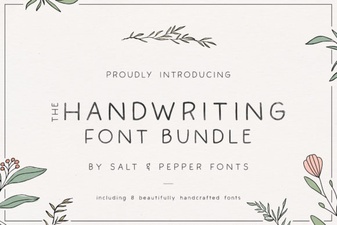 Creative Font Bundles for Handwritten Designs